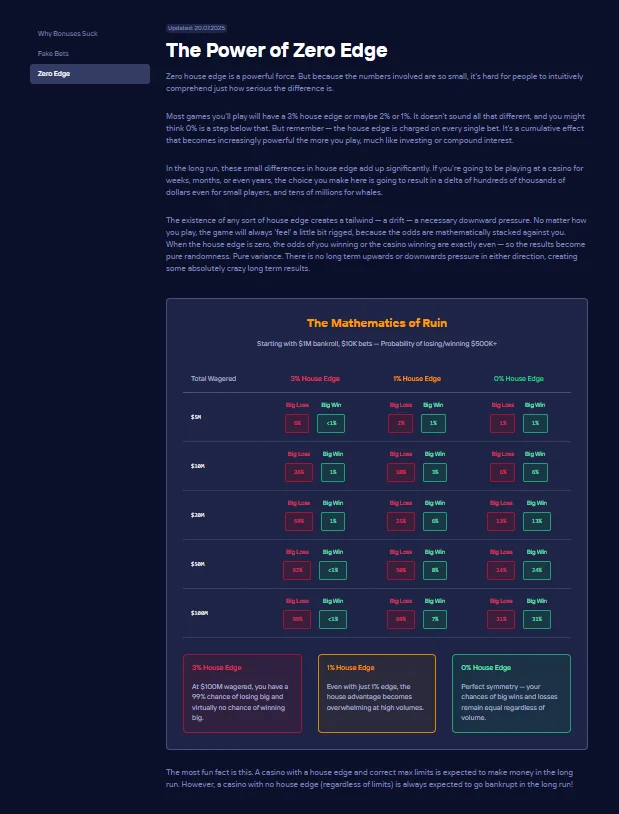










Our Duel.com code is dakebits. Duel is a crypto casino that launched in 2025 and does one thing differently: instead of bonuses, its own games — Duel Originals — have 0% house edge, marked “100% RTP” in the lobby. We signed up with the code on our own account on 18 October 2026.
What the code gets you
No bonus. Duel doesn’t run sign-up or deposit bonuses at all and explains why on its “Why Bonuses Suck” page: what matters is the house edge you pay on every bet, which usually costs you more than a bonus gives back. The code links your account to us. If another site promises free money or a deposit match for a Duel code, don’t believe it — Duel’s own terms forbid affiliates from offering rewards like that.
How to use the code
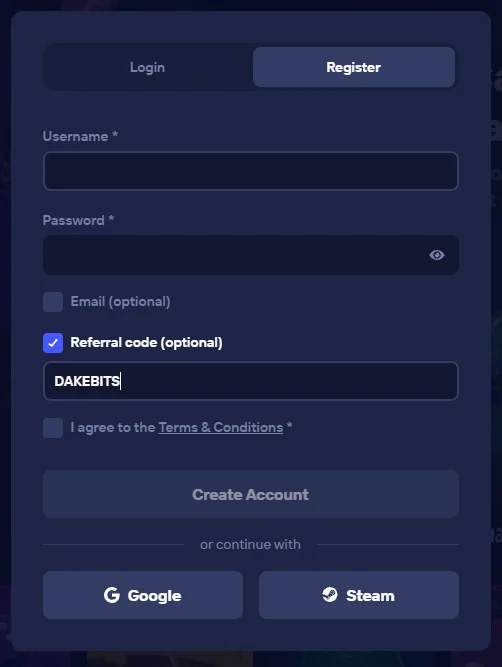
- Open Duel.com with the button on this page and choose Register.
- Pick a username and password; an email is optional.
- Tick “Referral code (optional)”, enter dakebits, accept the terms and create the account. You can also sign up with Google or Steam.
What 0% house edge means
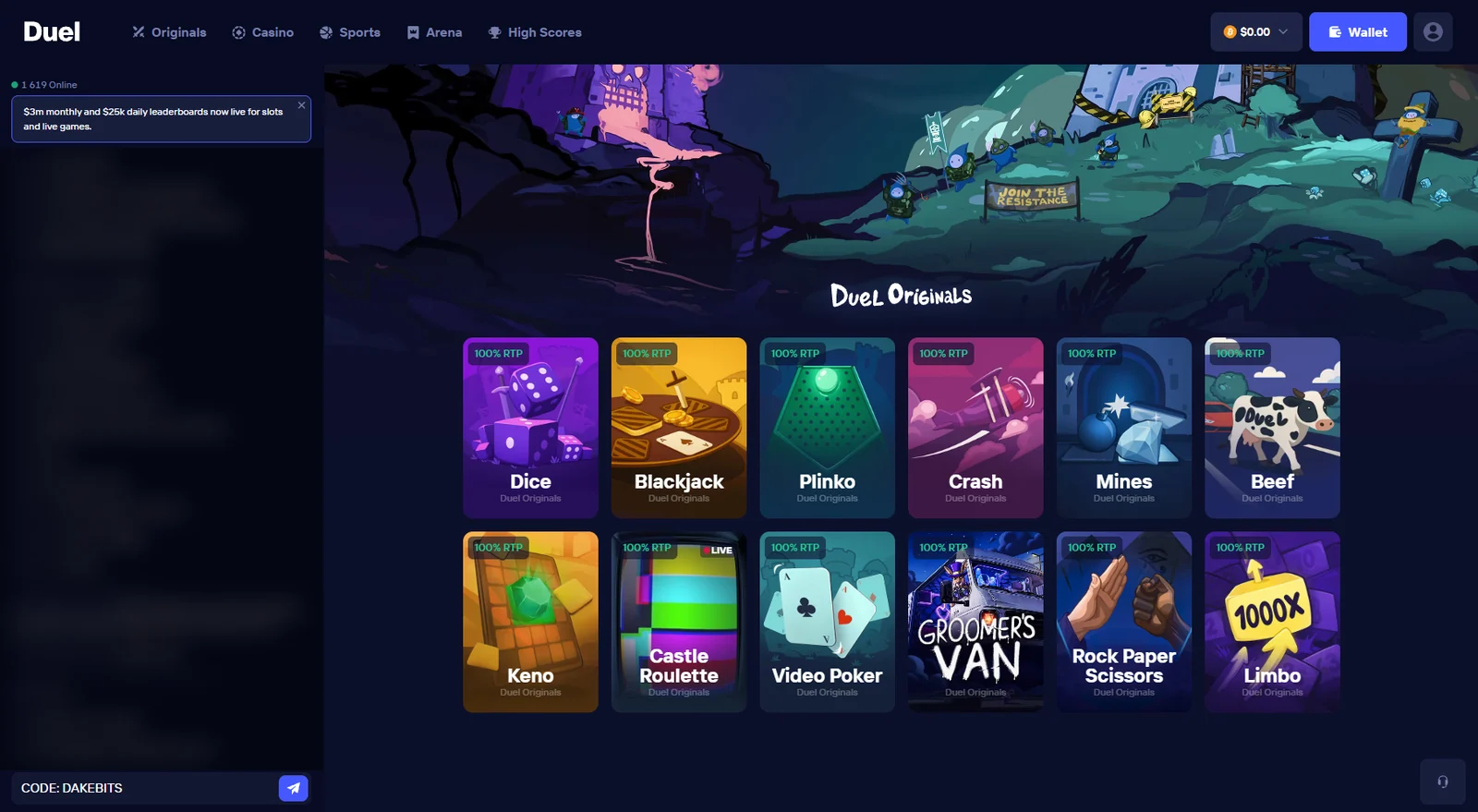
Most casino games keep 1–3% of every bet over time. On Duel Originals — Dice, Blackjack, Plinko, Crash, Mines, Keno, Limbo, Video Poker, Castle Roulette, Rock Paper Scissors and others — the expected return is 100%, so in the long run neither you nor the casino has an edge. It doesn’t mean you will win: results are pure chance, and you can still lose everything you deposit. Slots and live games come from other studios and have their own RTP. Our guide to the house edge works through what the edge costs on other games.
What else is on Duel
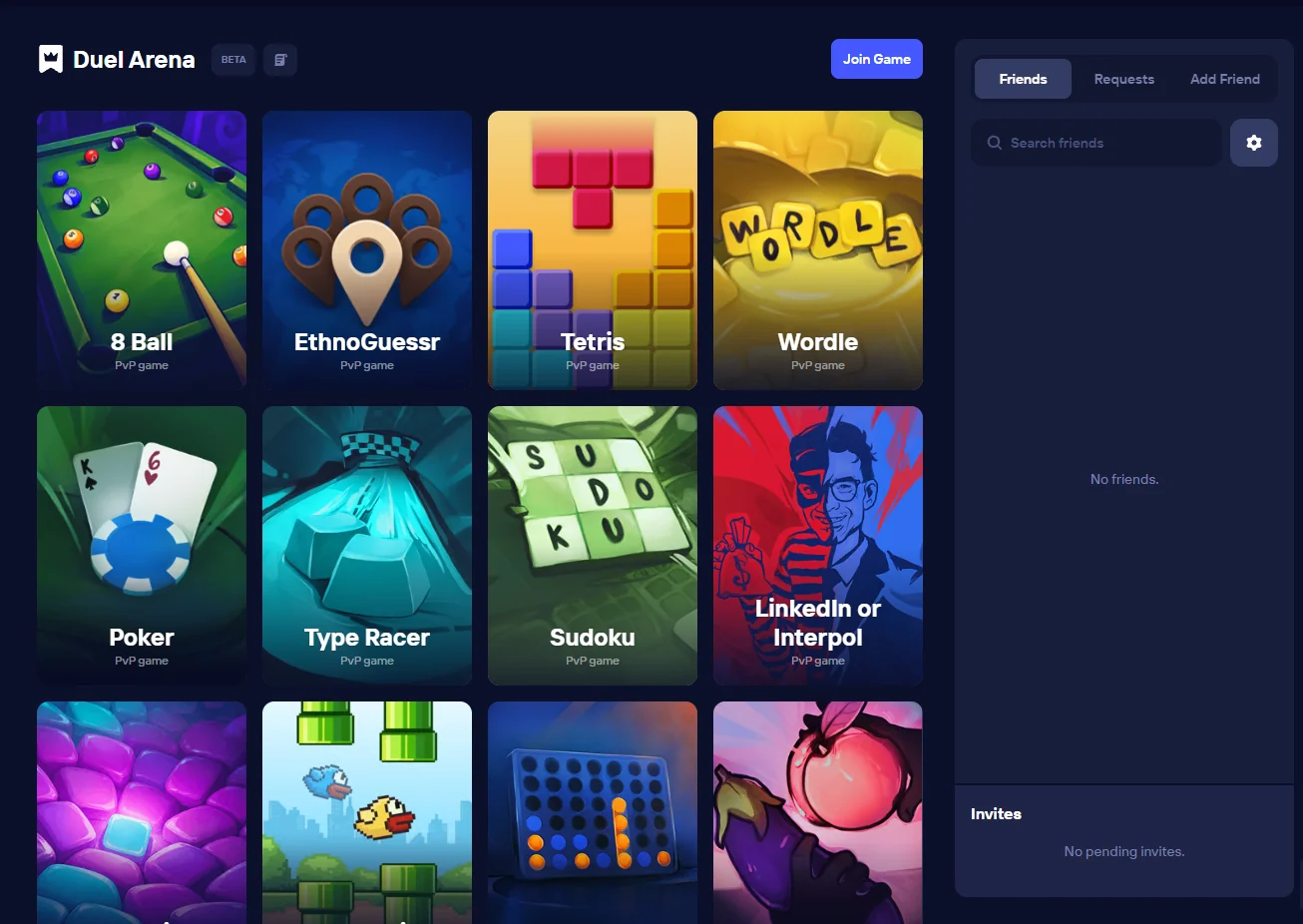
- Duel Arena (beta): play other people at 8 Ball, Poker, Tetris, Wordle, Sudoku, Type Racer, EthnoGuessr and more.
- Sports betting, slots and live casino.
- Leaderboards: when we checked, $3m monthly and $25k daily leaderboards were running for slots and live games, plus a High Scores page.
Duel.com deposits and withdrawals
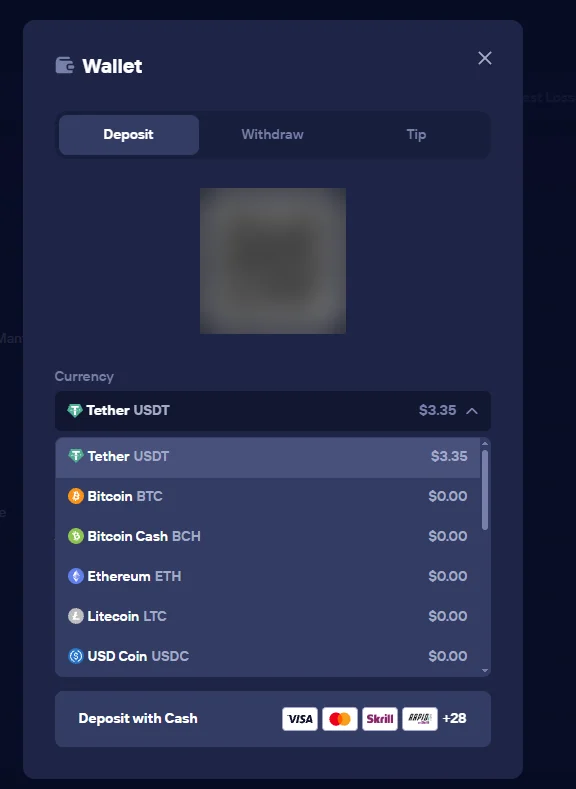
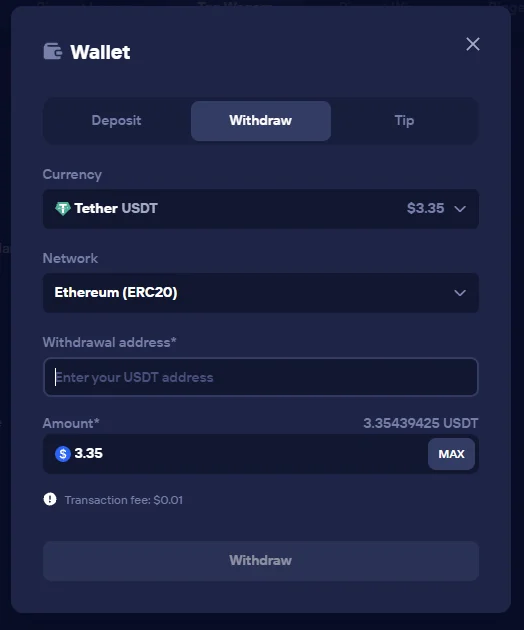
Crypto: Tether, Bitcoin, Bitcoin Cash, Ethereum, Litecoin, USD Coin and more. “Deposit with cash” offers Visa, Mastercard, Skrill and about 28 other options. Duel says it doesn’t profit from deposit or withdrawal fees, but network fees still apply: a Tether withdrawal on Ethereum showed a $0.01 fee.
Is Duel.com legit?
Duel.com is a crypto casino that launched in 2025, with a licence from Anjouan that the regulator’s validator showed as valid on 18 October 2026. It runs no bonuses at all: its own games have 0% house edge instead. Belgium and Switzerland block it.
- Licence. Immortal Snail LLC (Nevis, reg. no. L22982) runs it under licence ALSI-202411026-FI1. Here’s how to check a licence yourself.
- Who is behind it. According to Wikipedia, Ossi Ketola, who also started CSGOEmpire, founded it in 2025.
- Where it isn’t available. About 40 countries and territories, including the US, the UK and Australia.
- Fake bonus offers. If a site promises free money for a Duel code, don’t believe it: Duel’s terms forbid affiliates from offering rewards like that.
- Identity checks. An email is optional, but Duel can ask for ID before a withdrawal.
Licence and rules
- Licence: Immortal Snail LLC (Nevis, reg. no. L22982) runs Duel under licence ALSI-202411026-FI1 from the Autonomous Island of Anjouan, and the regulator’s licence validator showed it as valid on 18 October 2026.
- 18+ only. Duel can ask for ID before a withdrawal.
- Not available in about 40 countries and territories, including the US, the UK, Australia, France, Germany, Spain and the Netherlands — the full list is below.
- Who is behind it: according to Wikipedia, Duel was founded in 2025 by Ossi Ketola, who also started CSGOEmpire.
Where regulators block it
Belgium’s Gaming Commission added duel.com to its list of illegal gambling sites blocked in Belgium in July 2026, and the site is on the Swiss gaming board’s blocklist too. We don’t show Duel’s offer in either country.
Sources: our own Duel.com account (18 October 2026); Duel terms of service (6 October 2026), “Why Bonuses Suck” and “Zero Edge” pages; Wikipedia; Anjouan Gaming Board licence validator. Checked on 18 October 2026. Regulators: the Belgian Gaming Commission’s list (decision of 7 July 2026) and the Swiss blocklist (25 August 2026), read on 19 October 2026.